Nicholas Gilman Jr. founding father and enslaver?
2/12/20264 min read
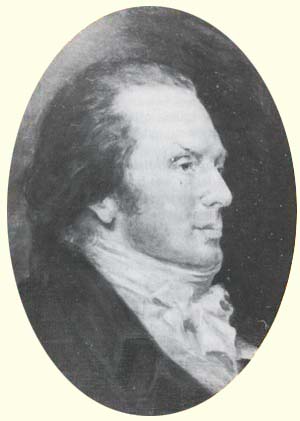
A few years ago, I conducted some research in New Hampshire. My role was to illuminate the history of the African Americans in a local town. This work led me to information about the Gilman family of Exeter, New Hampshire. The Gilmans were one of the wealthiest and most prominent families in New Hampshire. Gilman descendants played a prominent role in the invasion and expansion of the United States in the eighteenth century.
Some may be familiar with one of the Gilman family members, and so called founding father's, Nicholas Gilman Jr. Nicholas Gilman Jr., had a prosperous political career. While he spent the majority of his life in Exeter, he also spent time in Washington, D.C., after being elected to the House of Representatives from 1789 to 1797 and later to the Senate in 1805.
While he has traditionally not been represented as a founding father who enslaved people, records reveal that he was responsible for the enslavement and emancipation of individuals in DC in the early 1800s.
To understand Gilman's participation in slavery, I need to provide a bit of context on slavery in the north. Slavery was a reality in northern states, just as it was in the Southern states. In New Hampshire for instance, some of those enslaved in the first decades of colonial settlement were freed after a certain period. However, as time progressed, a harsher form of slavery became institutionalized, particularly following the enactment of the Virginia Slave Codes in 1705. The Virginia Slave Code formalized the legal framework surrounding slavery, stipulating that any non Christian servants arriving in the colony would be classified as enslaved people. The code established the enslaved as property.
The mass chattel slavery practiced in the Southern colonies was often not a reality in the north. Northern colonies like New Hampshire were not the center of tobacco and cotton production. Rather, the enslaved in those regions could be tasked to work in urban landscapes, and various sectors such as shipyards, waterfront areas, workshops, farms, and private homes.
During the 1770s and 1780s, abolitionist sentiment gained significant momentum across North America. Pennsylvania was an early leader in this movement, initiating legislative steps toward becoming a free state. However, rather than immediate, emancipation often occurred through informal processes and other transitional arrangements that blurred the line between bondage and freedom. Agreements promising eventual freedom often required years of continued labor that kept formerly enslaved people in conditions closely resembling slavery. It is within this landscape that Nicholas Gilman Jr.’s activities in Washington, D.C., become especially revealing.
Archival records from the early 1800s document Gilman’s direct involvement in the enslavement and conditional emancipation of two individuals: Andrew Dorsey and Polly McCarter. A manumission contract drawn up in the year 1810 lists Andrew as a “mulatto boy” 13 years of age. He apparently had been enslaved by Gilman since 1809. The document stipulated that Andrew would work for Gilman until 1821, after which he would be manumitted. Gilman purchased Andrew from William Stewart, an attorney and enslaver from D.C., for $100. Nicholas Gilman Jr. did not live long enough to fulfill his part of the contract, and it is unknown if Andrew was manumitted upon Gilman's death in 1814.
Polly McCarter was an enslaved woman from Washington D.C., originally owned by John Stewart. On March 4th, 1811, she was purchased by John Law, a prominent attorney known for his efforts to assist in the emancipation of enslaved individuals. Law bought Polly from William Stewart, the same man involved in Andrew Dorsey's contract, who was acting on behalf of John who was deceased. The very next day, on March 5th, 1811, a bill of sale was drawn up, and Polly was sold to Nicholas Gilman Jr. with the specific intention of securing her freedom. As part of her manumission, Polly was requested to repay Gilman her sale price ($100) with interest. She was sent to a boarding house in Philadelphia with Widow Maria Beckley, to work off her debt. Similar to Andrew Dorsey, it is not known what happened to Polly after Gilman's death.
Though Gilman has not been identified in scholarship as an enslaver, the lives of Polly McCarter and Andrew Dorsey complicate that silence. Their experiences also challenge narratives of slavery and emancipation in the north. Freedom, in these cases, was neither immediate nor unconditional. It was a precarious process, shaped by the authority of enslavers and the constraints of law. To reflect on Gilman’s legacy, then, is to acknowledge these contradictions: a founding figure operating within, and benefiting from, systems that limited Black autonomy even in the moment of supposed liberation.
SOURCES:
Aten, Carol Walker Aten. “A Brief History of African-Americans in Exeter.” Exeter Historical Society, (June 2016).
Bell, Charles Henry. History of the Town of Exeter, New Hampshire. Boston: J. E. Farwell, 1888.
Billings, Warren M. “The Law of Servants and Slaves in Seventeenth-Century Virginia.” The Virginia Magazine of History and Biography 99, no. 1 (Jan. 1991): 45–62.
Daniell, Jere R., Colonial New Hampshire: A History. Lebanon, New Hampshire: University Press of New England, 1981.
Estate Papers, Old Series, 1771-1869. New Hampshire Probate Court (Rockingham County). Probate Place: Rockingham, New Hampshire.
Gillman, Alexander W. Searches into the History of the Gillman or Gilman Family, Including the Various Branches in England, Ireland, America and Belgium. London: Elliot Stock, 1895.
Indigenous New Hampshire Collaborative Collective https://indigenousnh.com/2021/11/19/the-obscure-history-of-indigenous-exeter/
Slavery and the Making of America,” https://www.thirteen.org/wnet/slavery/timeline/1705.html.
Sweet, John Wood. “‘More than Tears’: The Ordeal of Abolition in Revolutionary New England.” Explorations in Early American Culture 5, (2001): 118–172.
John Law and Nicholas Gilman Slave Bill of Sale (Private collection)
Washington D.C. Register of Deeds Manumission; Book X23, page 253.
Washington D.C. Register of Deeds Bill of sale; Book Z25, Page 535.